Wordzee! - Puzzle Word Game
- 4.5
- Rating
- 5.00M
- Installs
- Free
- Price

 Analysis by App-foxy
I approached Wordzee! as the kind of game I could play in short bursts rather than as a title demanding a long, uninterrupted session. It is a free word game from MAG Interactive, built around arranging letters on a puzzle board while trying to make better choices than the person on the other side. That sounds simple, but the appeal comes from having to balance a good word against a good placement, and immediate points against a stronger board position later.
My first impression was that it is easy to understand without feeling completely shallow. You can begin by forming familiar words, then gradually notice that the board rewards planning, letter management, and attention to available spaces. It is suitable for Everyone, so it is a comfortable recommendation for households looking for a light word challenge. At the same time, the competitive element gives experienced players something to think about beyond merely finding the longest word.
What to consider before choosing Wordzee!
The main question is what you want from a word game. If you need a fast solo puzzle with a fixed answer, this may not be the closest match. If you enjoy making decisions with imperfect letters and comparing your result with another player, it becomes much more interesting. I would judge it on four points: how satisfying the board feels, whether the pace suits your routine, how much competition you want, and how comfortable you are with optional spending.
You May Also Like

 Blood Strike: 2.5 Anniversary
Blood Strike’s Loadouts Turn Every Drop Into a Tactical Gamble
A close look at Blood Strike’s custom loadouts: how fast access to signature weapons reshapes its battle royale rhythm, rewards preparation, and narrows the gap between fights.

 Pandora - Music & Podcasts
Pandora’s Music Is Easy to Start, but Harder to Recover
Pandora’s strength is its low-effort path from a seed to a station. Its weak spot is how much confidence it asks you to place in connection, setup, and quiet recovery.

 8 Ball Pool
 Is Built on Rivalries, Rematches, and Routine
A close look at the rivalries, rematches, shared routines, and unanswered safety questions that turn a quick pool match into a persistent mobile community.

 Samsung Music
’s Quiet Strength Is Playing What You Already Own
Its reach comes less from spectacle than from dependable access to a personal library. That simplicity is both the app’s strongest retention engine and its ceiling.

 AccuWeather: Weather Radar
AccuWeather Review: A Quick, Clear Forecast for Everyday Decisions
For everyday plans, the best forecast is the one you can understand quickly. AccuWeather makes rain timing, radar, and local conditions easy to act on, with a few trade-offs.

 Hill Climb Racing
Why Hill Climb Racing Still Turns Crashes Into One More Run
A tiny car, a bumpy hill and one more upgrade: Hill Climb Racing keeps resurfacing because its simple chaos makes every near-miss feel personal.
More From Our News Desk



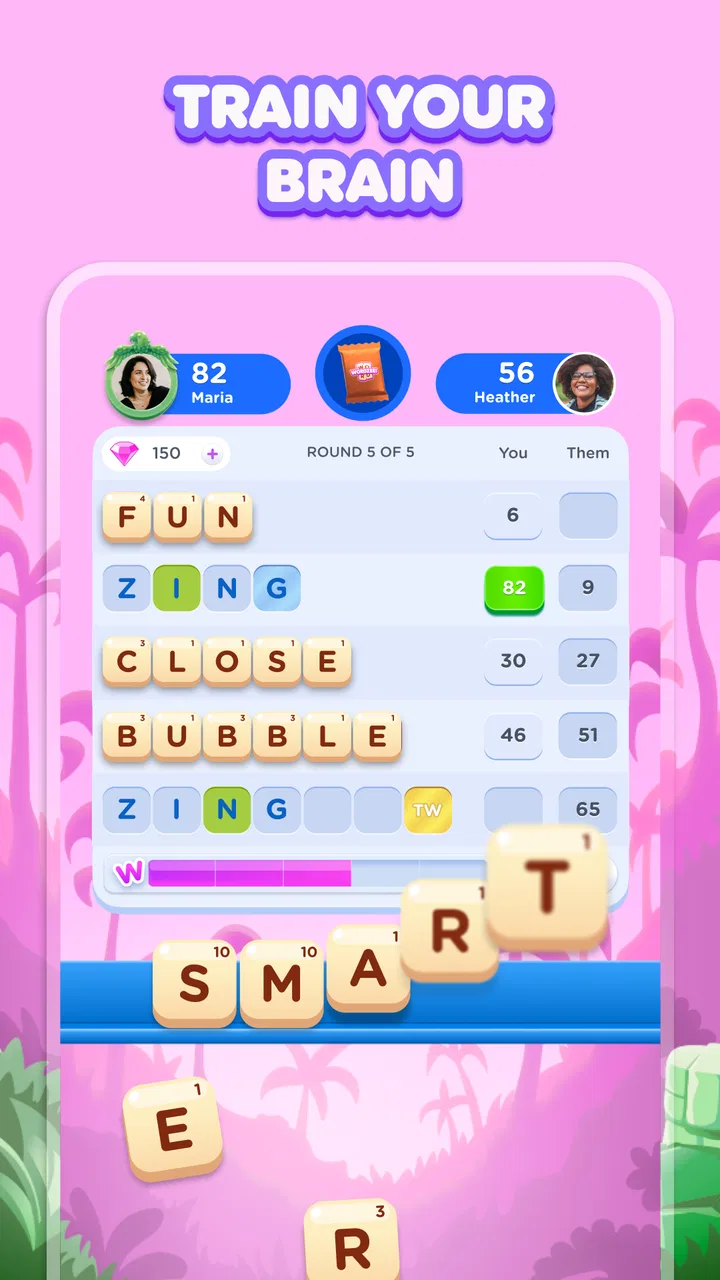
The board is the heart of the experience. A strong turn is not always the one that creates the most impressive word. Sometimes the smarter move is to use an awkward letter before it becomes a problem, preserve a useful space, or avoid giving the other player an easy opportunity. That extra layer is what separates this from a basic vocabulary exercise. You are solving a word problem while also managing position.
I also considered how well it works when attention is limited. This is a game I would open while waiting for an appointment, during a short commute, or at the end of the day when I want something active but not demanding. The turn-based feel makes it easier to pause than a timed word scramble. Still, anyone who dislikes waiting for another player or prefers a constant stream of new challenges may find the rhythm less satisfying.
The game is free to download, which makes trying it straightforward. Optional in-app purchases range from under a dollar to amounts approaching fifty dollars per item, so I would recommend checking the purchase controls before handing the device to a child. The free entry is useful, but the presence of purchases means the best experience depends partly on how comfortable you are ignoring extras.
The board rewards more than vocabulary
One of the most useful lessons I took from playing is that word knowledge alone does not guarantee a good result. A player who knows fewer unusual words can still do well by using the board carefully. Before committing a move, I look at the letters I am likely to be left with, not just the word I can make immediately. This small habit improves consistency and makes the game feel more strategic.
Another practical approach is to stop chasing spectacular words every turn. A shorter word that fits efficiently can be more valuable than a longer one that leaves poor options behind. This is especially important when the available letters are unhelpful. Instead of treating every turn as a vocabulary test, I treat it as a small resource-management problem: which letters should be spent now, and which spaces should remain useful?
The board can also change how I think about familiar words. I may notice a perfectly ordinary option only after considering where it can fit. That makes the game accessible to casual players while leaving room for improvement. You do not need to memorize obscure dictionary entries to enjoy it, although a broader vocabulary naturally helps when the board becomes tight.
Why the social competition matters
The competitive side gives each move more weight. In a purely solo puzzle, I can solve a board and move on. Here, I am more aware of whether my choice creates a strong position for the next turn or leaves an advantage for someone else. That feeling is useful for players who enjoy friendly rivalry without the intensity of a real-time action game.
It also creates a natural reason to return. I am not simply trying to beat an abstract score; I am trying to make a better decision than another person. That can make an ordinary word feel surprisingly satisfying when it fits exactly where I need it. Conversely, a poor move is easy to remember, which encourages experimentation in the next round.
The trade-off is that the social structure may not suit everyone. If you want a completely private puzzle session, competing with other people can feel like unnecessary pressure. I would choose a more traditional solo word puzzle for quiet practice, vocabulary building, or a game that has a clear finish every time I open it.
Everyday use: a good companion for short breaks
A realistic way to use it is during several small breaks throughout the day. I might make a move with coffee, return later when I have a few minutes, and then think through the next board position in the evening. That pattern works because the game does not require me to reserve a full hour. It turns scattered spare time into something more engaging than scrolling.
For families, the Everyone rating and familiar word format make it approachable. I would still explain the purchase settings to younger players and decide whether the device owner should be allowed to buy anything. For friends, the game can provide a low-pressure challenge that does not require both people to be online at the same moment. That flexibility is more useful than it first appears.
It is less suitable for a group sitting together around one screen. The experience is built around individual turns and personal decisions rather than a shared party format. If your priority is loud, immediate multiplayer entertainment, a party word game will probably create more energy. This is better for a slower rivalry that can continue between conversations and daily tasks.
How it compares with familiar word-game alternatives
Compared with a crossword-style app, Wordzee! feels less focused on clues and more focused on construction. A crossword asks me to retrieve a specific answer; this asks me to decide which possible word is most useful on the board. That makes it a better fit when I want freedom in my choices, while a clue-driven puzzle is preferable when I enjoy deduction and a defined solution.
Compared with a timed anagram game, it is calmer and more deliberate. I have more opportunity to inspect the board and think about consequences. The downside is that it may feel slow to someone who enjoys the rush of finding words against a countdown. I would pick the timed alternative for a quick burst of adrenaline and this one for a thoughtful back-and-forth.
Compared with a classic word-board game, the appeal is familiar but more convenient for casual mobile play. The important difference for my decision is not whether one format is universally better; it is whether I want a traditional, uninterrupted match or a flexible game that can fit around other activities. Players who already love physical word tiles may appreciate this adaptation, but they may miss the social feeling of sitting at the same table.
There is also a distinction between this and vocabulary-training tools. A learning app may explain definitions, track study goals, or deliberately introduce new terms. I would not choose Wordzee! as a replacement for structured language practice. Its value is entertainment with a meaningful mental challenge, not a formal lesson. That distinction prevents disappointment and makes its strengths clearer.
Small tactics that improve the experience
My first tip is to inspect the whole board before looking for a word. Starting with the letters can lead me toward an attractive but badly placed answer. Starting with the open spaces shows what the board is asking for. I then compare several possibilities instead of accepting the first familiar word that comes to mind.
My second tip is to protect flexibility. If I can use a difficult letter in a reasonable move without wasting a valuable position, I often prefer that over saving it for an ideal word that may never appear. This is a useful trade-off for newer players because it reduces the number of turns where the remaining letters become a burden.
My third tip is to review losses as board decisions rather than vocabulary failures. When a turn goes badly, I ask whether I overlooked a better placement, opened a useful area for the opponent, or held onto an awkward letter too long. That mindset makes improvement feel practical. It also keeps the game enjoyable for players who do not consider themselves word experts.
A fourth habit is to avoid treating every match as a test of perfection. The best move may not be obvious, and uncertainty is part of the appeal. I find the game more enjoyable when I try a different approach from time to time instead of repeating the same safe pattern. This is particularly helpful when playing against someone with a different style.
Performance, access, and the cost of changing habits
The minimum operating system requirement is Android 5.1, which places the game within reach of many older Android devices. The current version is 1.241.0, so I would keep the app updated where possible for the smoothest experience. On iOS or Android, the larger decision is less about raw access and more about whether the game’s turn-based word-board format matches your expectations.
Switching from another word game is easy at the rules level, but the habit change can take longer. Someone coming from a crossword app may initially look for clues that are not there. Someone leaving a rapid anagram game may need to become comfortable with slower planning. Someone moving from a traditional board-game app may enjoy the familiar letter placement but need time to adapt to a more mobile-friendly pace.
The game has a substantial audience, with over five million installs, an average rating of 4.5, around sixty-nine thousand ratings, and roughly nine thousand written reviews. Those figures suggest that the format has broad appeal, but they should not replace personal testing. A popular word game can still be the wrong choice if you dislike asynchronous competition, board management, or purchase prompts.
The cost of switching is therefore mostly about expectations rather than money. Since the game is free to start, I can see whether the board and pacing suit me before committing. The more important commitment is attention: if I become invested in matches, I may find myself checking for the next move more often than intended. I would set a spending limit and notification preference early, especially on a shared family device.
Who should choose it—and who should skip it
I recommend it to players who enjoy word games but want more freedom than a clue-based puzzle provides. It is also a good choice for people who like friendly competition, need a game that works in short sessions, and enjoy improving through small strategic decisions. Casual players can make words immediately, while more experienced players can focus on placement, letter economy, and denying useful opportunities.
I would be more cautious if your main goal is education. The game can encourage vocabulary awareness, but it is not the same as a guided language course. I would also steer away from it if you want a fully offline-feeling solo experience, a fast timer, or a party game designed for everyone to play at once. In those cases, another category will fit your routine better.
Parents should also make a simple decision before installing it: whether purchases are allowed. The Everyone age rating makes the content approachable, but age suitability and spending suitability are separate questions. I would review the device’s purchase settings and explain that free installation does not mean every optional item is free.
For competitive players, the key question is whether you enjoy close decisions more than constant action. A match can be rewarding because of one carefully chosen placement, not because the screen is full of effects or rapid events. If that kind of quiet tension sounds appealing, the game has a good chance of becoming a regular break-time habit.
My recommendation after playing
Wordzee! works best when I treat it as a strategic word board rather than a simple word finder. Its strongest feature is the way it turns ordinary vocabulary into a series of positional choices. The game is approachable enough for a quick first session, yet thoughtful enough that I can still discover better habits after many rounds.
I would download it for a friend who wants a free, flexible word challenge with a social edge. I would explain that the fun comes from balancing the word, the space, and the letters left behind—not from producing the longest word every time. I would also mention the optional purchases upfront so there are no surprises on a shared device.
My final verdict is positive, with a clear qualification: choose it for deliberate, turn-based word competition, not for rapid-fire puzzles or structured learning. MAG Interactive has made a game that fits naturally into short breaks and rewards careful thinking. If that balance matches what you want, it is an easy recommendation; if you need clues, speed, or a completely solo format, another word-game style will serve you better.
For me, the lasting appeal is the small decision hidden inside every turn. I can know several possible words and still have to decide which one helps most. That is enough depth to keep the familiar format from becoming automatic, while the free entry makes experimenting painless. As a mobile word game for casual rivalry and measured play, it earns a place on my device.
FAQs for Wordzee! - Puzzle Word Game
01What is Wordzee! and how is it played?
Wordzee! is a captivating puzzle word game where players create words from a set of letter tiles. The goal is to fill the board by crafting words in a strategic manner, maximizing your score. Each game presents unique challenges, as the letter tiles vary in each round, requiring players to adapt their strategy.
02Is Wordzee! suitable for all age groups?
Yes, Wordzee! is designed to be family-friendly and suitable for various age groups. Its intuitive interface and adjustable difficulty levels make it accessible for both children and adults. The game also encourages vocabulary development, making it a fun educational tool for younger players.
03Are there in-app purchases in Wordzee!?
Wordzee! offers optional in-app purchases to enhance the gaming experience. Players can purchase additional coins, power-ups, and customization options. While these purchases can provide advantages, they are not necessary to enjoy the game fully, as skill and strategy remain central to success.
04Can Wordzee! be played offline?
Yes, Wordzee! can be played offline, allowing users to enjoy the game without an internet connection. However, certain features, such as leaderboards and social interactions, require an internet connection. Offline play is perfect for users looking to enjoy the game on the go without data usage.
05Does Wordzee! offer multiplayer options?
Wordzee! includes multiplayer options, allowing players to compete against friends or random opponents online. This feature adds a social dimension to the game, enabling users to challenge others and improve their skills through competitive play. Players can also participate in daily and weekly challenges for additional rewards.
Pros
- Engaging and addictive gameplay experience.
- Wide variety of challenging levels.
- Visually pleasing and intuitive interface.
- Daily rewards keep players coming back.
- No intrusive ads interrupting gameplay.
Cons
- Can require frequent in-app purchases.
- Some levels feel repetitive over time.
- Limited social interaction features.
- Occasional connectivity issues noted.
- Requires consistent internet access.

Wordzee! - Puzzle Word Game
Gallery